
Freehold vs Leasehold: What’s the Difference?
Whether you’re buying your first home or planning your next move, understanding the type of property ownership is an important part of making an informed decision.
Two common types of property tenure are freehold and leasehold. While both allow you to own a property, the nature and duration of ownership are different.
Two common types of property tenure are freehold and leasehold. While both allow you to own a property, the nature and duration of ownership are different.
What Is Freehold Property?
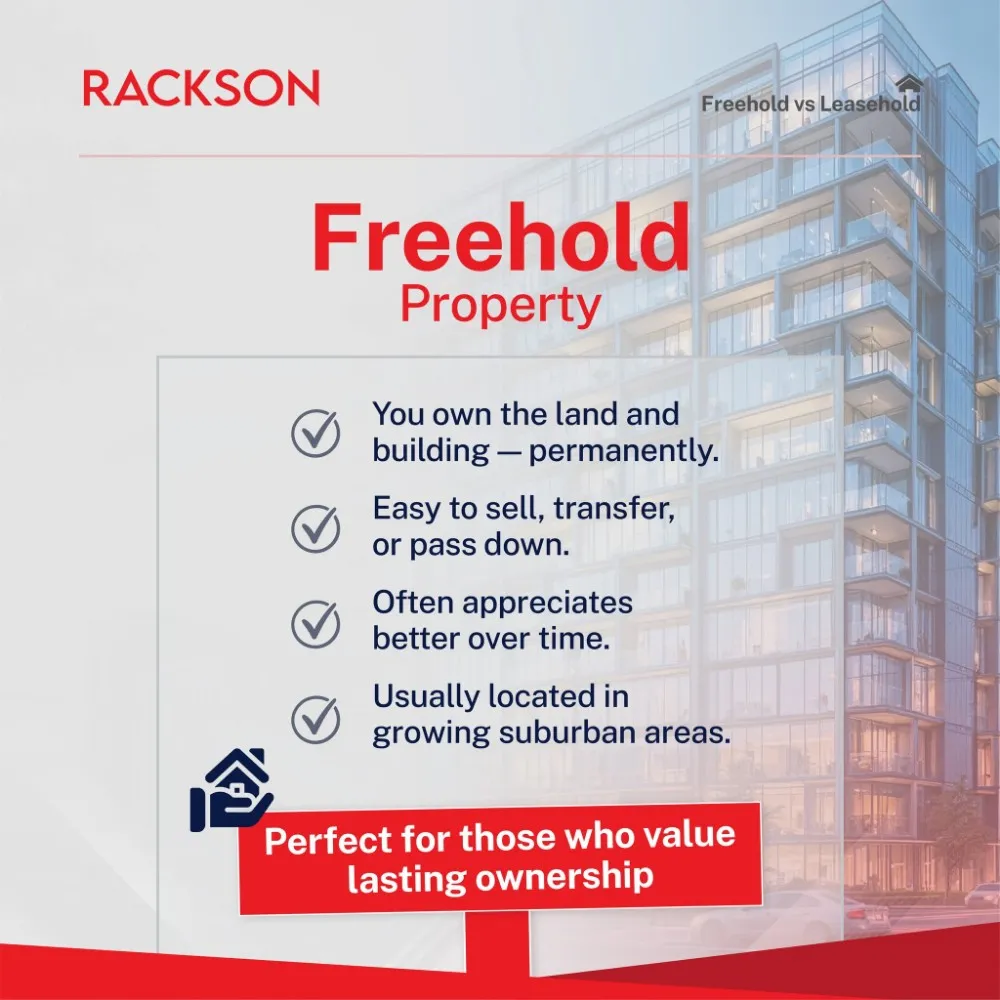
A freehold property generally provides ownership of the property without a fixed lease term. Depending on the title and applicable laws, the ownership can continue indefinitely, subject to the relevant legal conditions.
For many property buyers, freehold ownership offers a sense of long-term security and peace of mind.
For many property buyers, freehold ownership offers a sense of long-term security and peace of mind.
Key considerations for freehold properties:
- No fixed lease expiry in the usual sense
- Long-term ownership
- Greater flexibility for long-term planning
- Suitable for buyers who prioritise long-term ownership
What Is Leasehold Property?
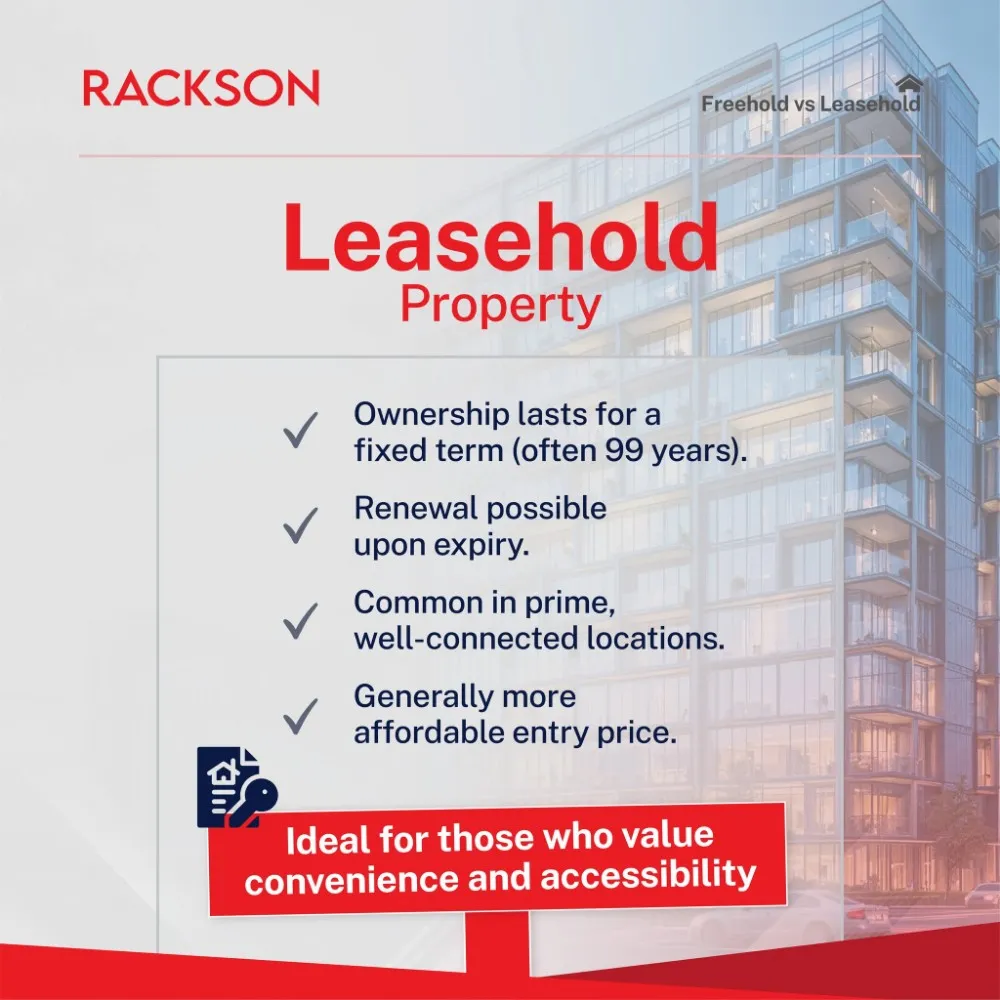
A leasehold property is held for a specified period, as stated in the title or lease. The lease term can vary depending on the property and its location.
Leasehold properties can also be found in established and well-connected areas, including locations where land availability and development considerations influence property tenure.
Leasehold properties can also be found in established and well-connected areas, including locations where land availability and development considerations influence property tenure.
Key considerations for leasehold properties:
- Ownership is subject to a specified tenure
- Lease duration varies between properties
- Can be located in strategic and well-connected areas
- May offer attractive options depending on location and property type
Which One Is Right for You?
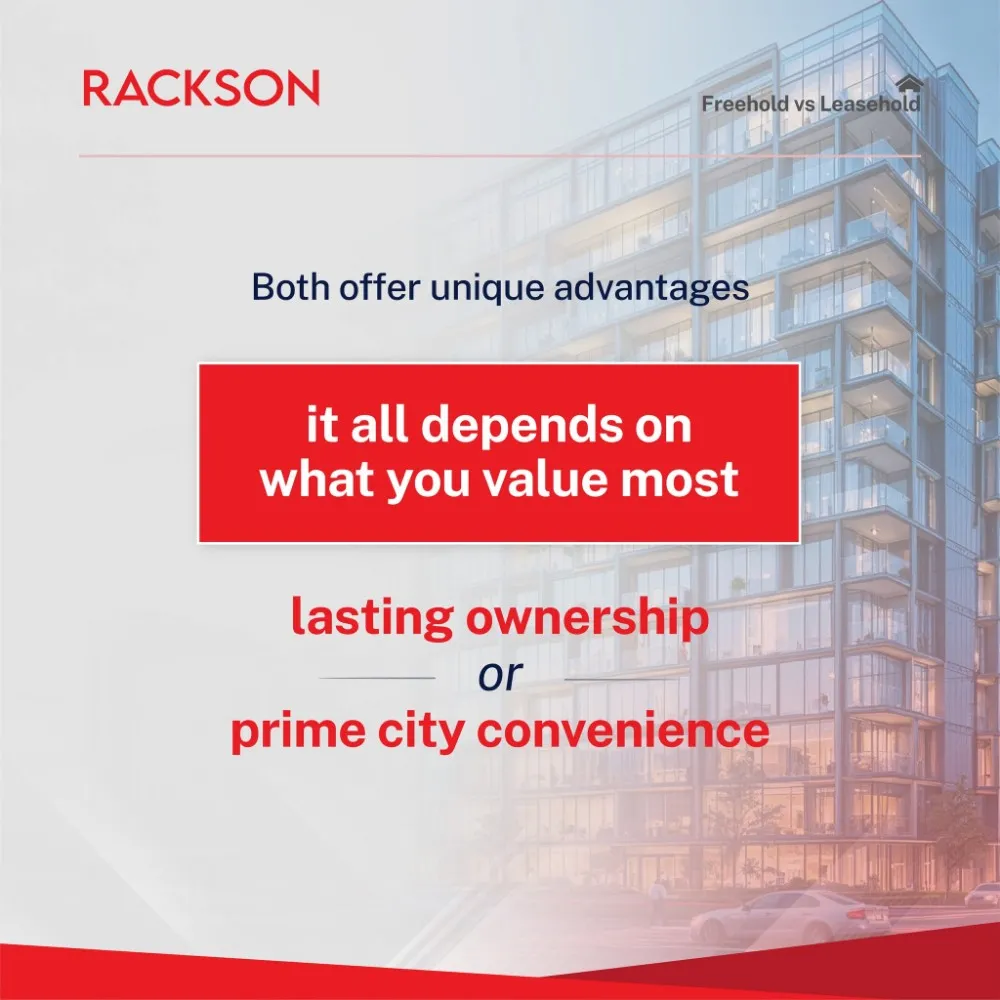
Neither freehold nor leasehold is automatically the better choice. The right option depends on your budget, lifestyle, preferred location, investment objectives and long-term plans.
Before purchasing a property, it is important to understand the tenure, remaining lease period where applicable, and any relevant conditions attached to the property title.
Before purchasing a property, it is important to understand the tenure, remaining lease period where applicable, and any relevant conditions attached to the property title.
Understanding property ownership is the first step towards making a decision that suits your future.